
By Claire Wooden. July 15, 2026
How Augustas Serapinas Questions the Discipline Behind Artistic Training
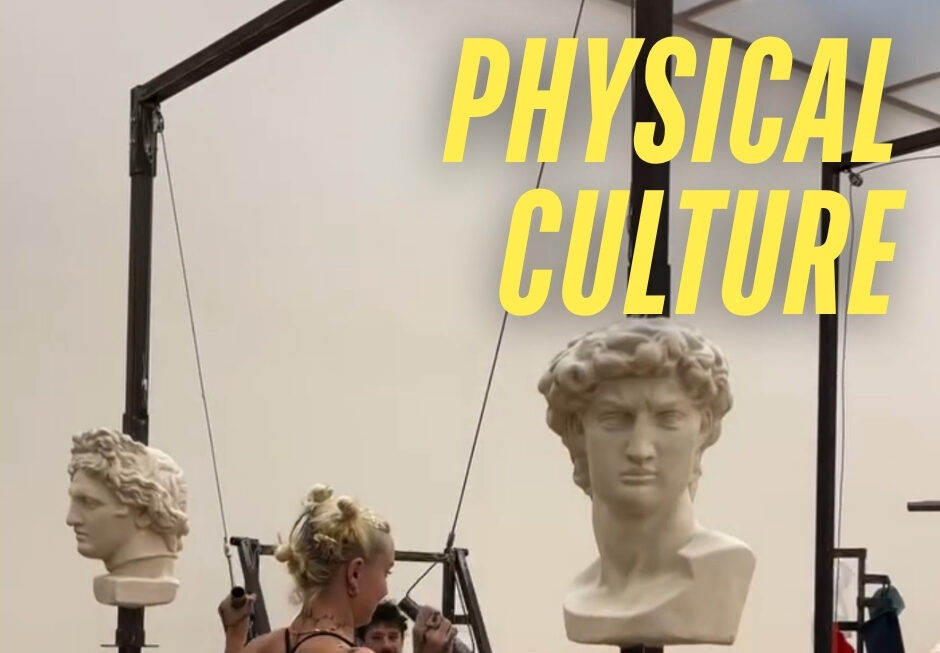
Physical Culture brings together sculpture, performance, education and physical exercise in an installation that examines how artistic knowledge is produced and transmitted. Presented at Nottingham Contemporary, the exhibition marks the first institutional solo exhibition in England by Lithuanian artist Augustas Serapinas, whose practice frequently investigates the structures that shape collective memory, public institutions and systems of learning. Nottingham Contemporary hosts this large-scale project, curated by Katie Simpson and Klara Szafrańska.
At the centre of the exhibition is the keyword Physical Culture exhibition, understood not simply as a presentation of sculpture but as an investigation into the relationship between artistic discipline and bodily training. Rather than separating intellectual and physical labour, the installation demonstrates how both rely on repetition, technique and inherited systems of value.
Revisiting An Early Artistic Project
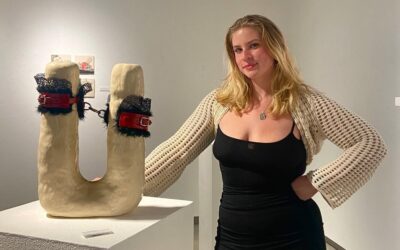
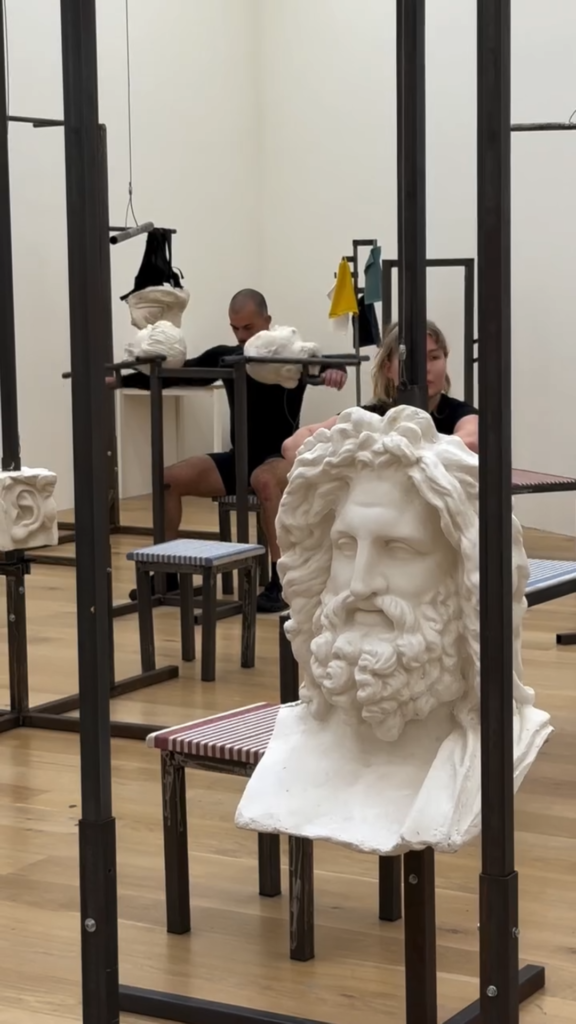
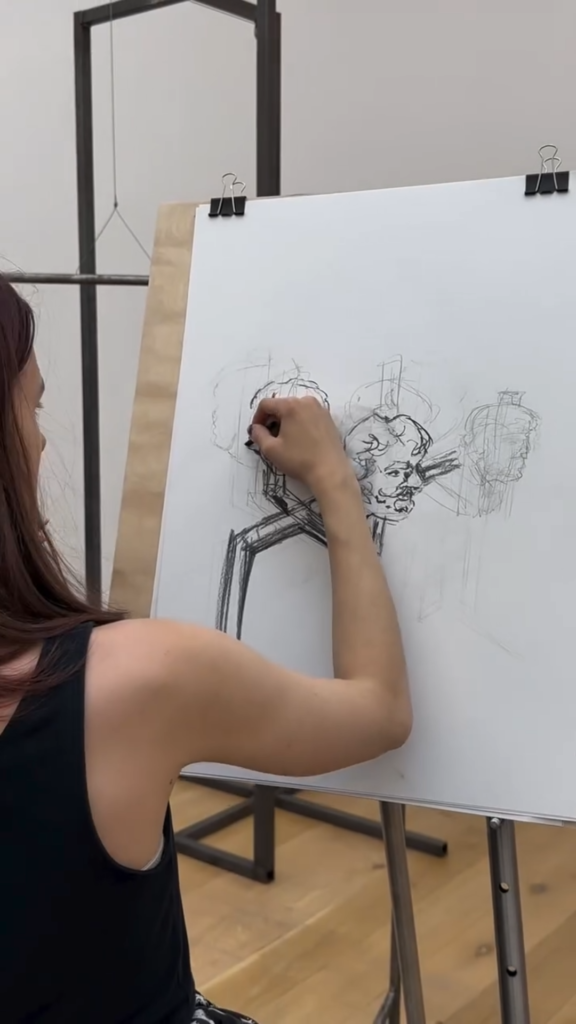
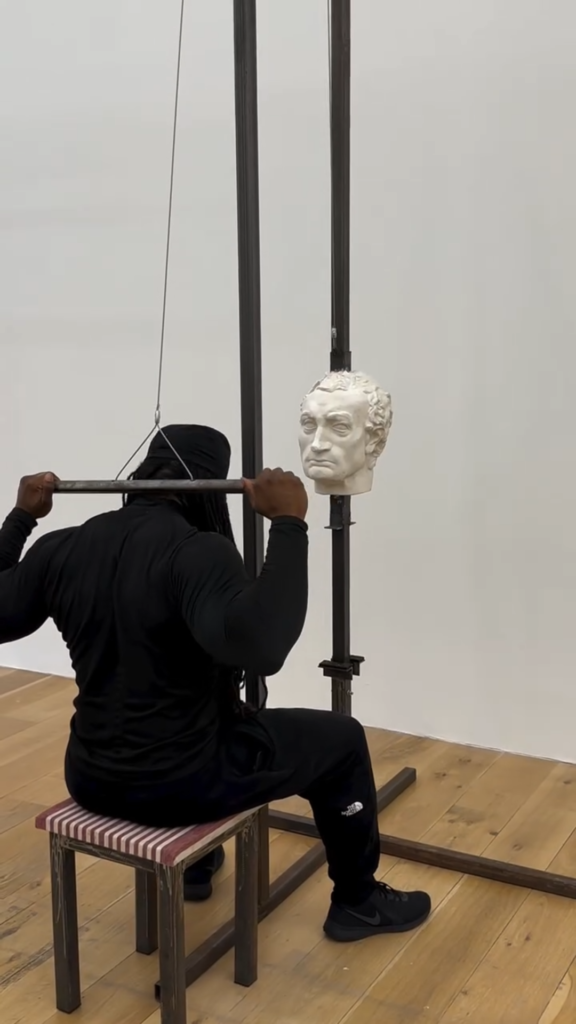
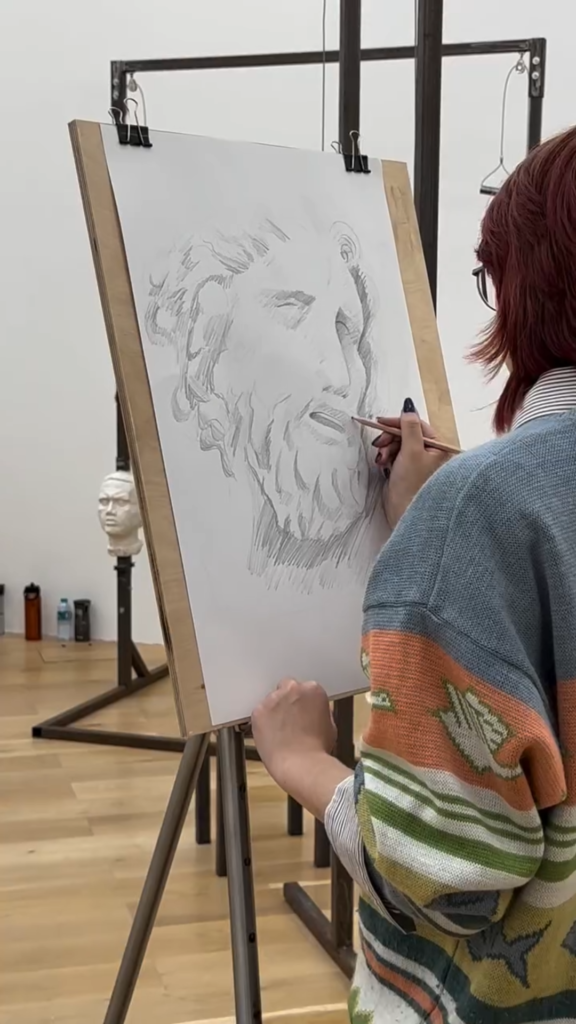
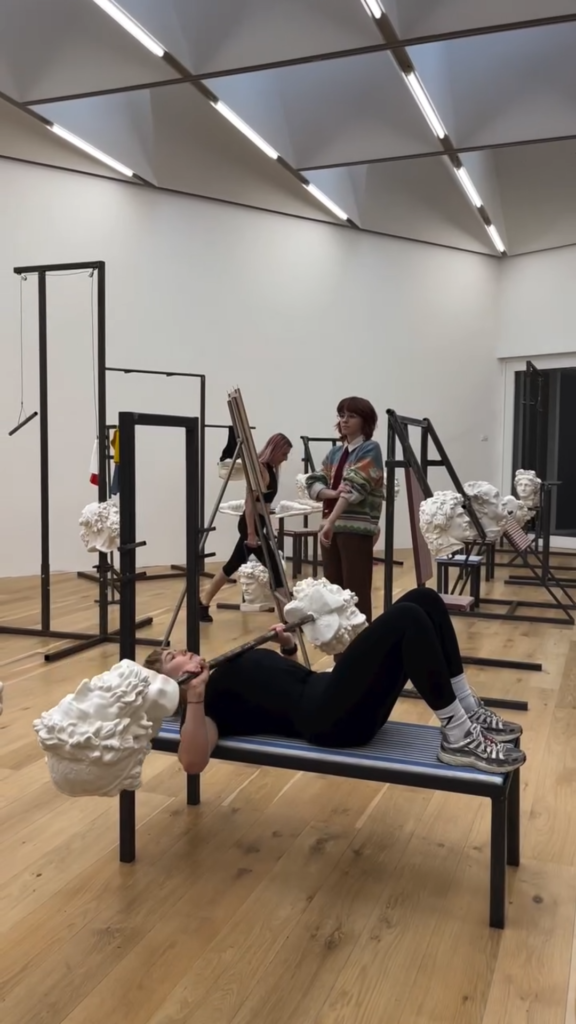
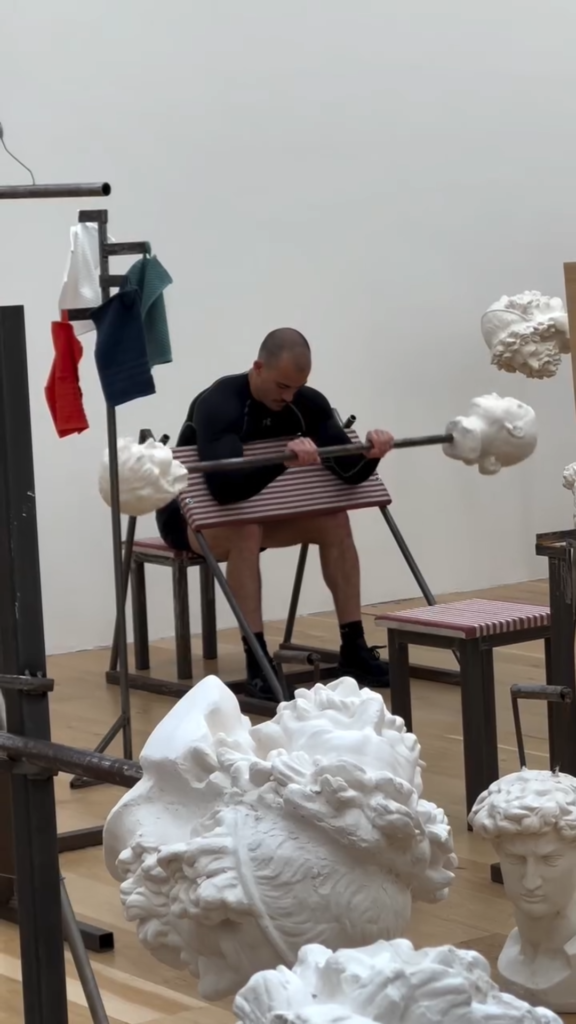
The installation revisits a body of work first created in 2012 while Serapinas was studying sculpture at the Vilnius Academy of Arts. Returning to school archives, the artist reconstructed copies of his own student works, including portraits of classmates, an earthworm and an alien. Alongside these appear plaster study models and replicas of canonical sculptures such as Michelangelo’s David and the Apollo Belvedere, all attached to self-made gym equipment.
By transforming sculptural objects into functional exercise machines, the exhibition establishes a direct dialogue between the repetitive labour required to master classical artistic techniques and the equally repetitive routines associated with bodybuilding. Both systems depend upon discipline, endurance and the pursuit of ideal forms.
Questioning The Canon
Rather than celebrating academic tradition, the exhibition critically reflects on the continued dominance of able-bodied white male figures within fine art education. Classical sculpture has historically defined ideals of beauty, proportion and excellence, yet these standards continue to influence contemporary cultural expectations in ways that often remain unquestioned.
Through the physical act of engaging with sculptural gym equipment, visitors encounter these inherited traditions as lived experiences rather than distant historical references. The installation encourages reflection on how institutions shape artistic values and how those values continue to circulate today.
Connecting Local And Historical Memory
Across the galleries, a running track links the installation through newly created hurdles incorporating casts of the Waverley Heads. Developed in collaboration with Nottingham Trent University Archive and specialist casting practitioners, these sculptures connect local histories of art education with broader questions surrounding institutional memory and the construction of Western artistic narratives.
The exhibition expands beyond individual biography by situating educational archives within larger conversations about collective cultural memory. Local references become part of an international discussion concerning which histories are preserved, reproduced and continually reinforced.
Why The Exhibition Matters
Physical Culture demonstrates how contemporary sculpture can function simultaneously as installation, educational environment and critical inquiry. Instead of presenting static objects, the exhibition activates relationships between the body, historical knowledge and institutional authority, encouraging visitors to reconsider how artistic traditions are learned, repeated and embodied.
For travellers interested in contemporary art, the exhibition offers an opportunity to experience a project that connects local educational histories with wider debates around representation, cultural memory and the legacy of classical aesthetics. Readers interested in discovering more international exhibitions can also explore Lemon Art Magazine’s Agenda.