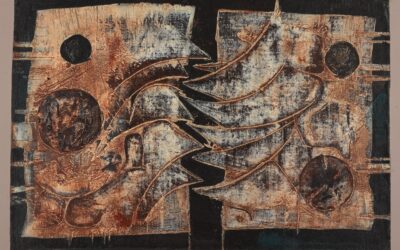

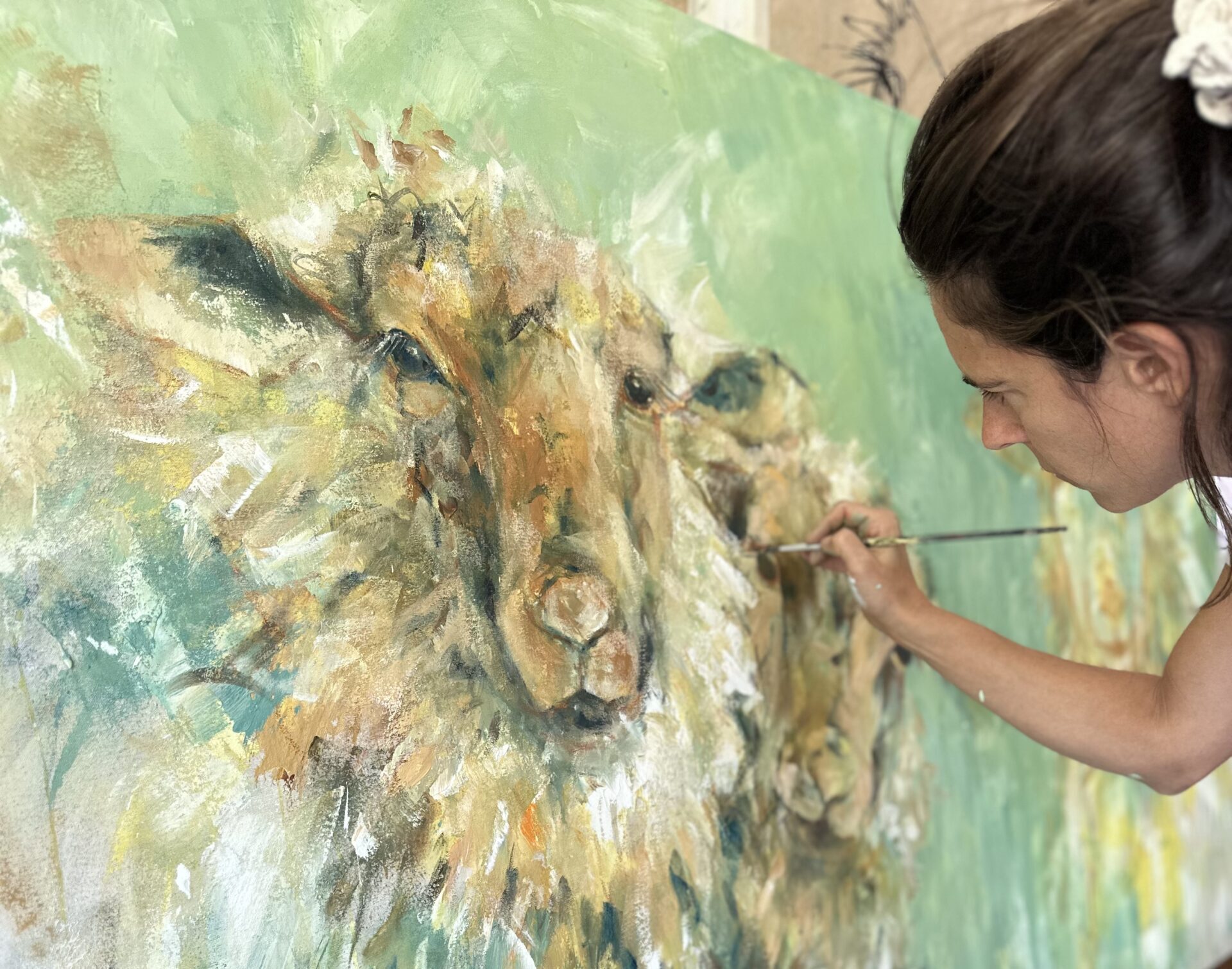
Born in Buenos Aires, Mariana Berardi has lived since 2015 in Venado Tuerto, Santa Fe, where she creates paintings and watercolors infused with the calm of the rural landscape and the vitality of the pampas’ animals.
With experience in stage design at Teatro Colón and training that includes years of art study in France, her work moves between the pause of the countryside and the intensity of color. In this interview, Berardi shares how “time moves at the pace of the tractor,” the role that continuous training plays in her career, and which lessons from Paris remain alive in her painting. A conversation that reveals how discipline and education sustain the creative freedom of her work.
How did your perspective change when you left Buenos Aires and settled in Venado Tuerto?
I was born in Buenos Aires, a huge city. Venado Tuerto is a city of 80,000 people in the province of Santa Fe, in the heart of the Argentine humid pampas. It is surrounded by vast stretches of farmland and has a strong agricultural presence. Ten years ago, I moved there with my family. Without realizing it, this new place would become my greatest source of inspiration. Venado Tuerto gave me the ability to stop.
Visits to the countryside became my main driving force, creating a need to convey in my work what I feel when I am there: the calm of contemplating the immensity of nature and immersing myself in its musical silence.
How does this rural environment influence your work?
Rural life moves me; it connects me to the here and now. Time is slower, almost immeasurable;punctuality gives way to the unforeseen. You look at the sky to predict a storm, breathe in the scent of rain on dry soil, eyes sting from the dust when water is scarce. Weekends depend on the weather: if it rains, there’s rest; if not, the farm routine continues.
It’s a calmer rhythm than the one I carried from Buenos Aires. And it permeates me: the idea of pausing in the instant when an animal looks at me, understanding that the emotions the pampas awaken in me are unique, personal. And somehow, I feel the need to share them: in my own way, authentically.
How does living in a place where “time moves at the pace of the tractor” reflect in your work?
It shows in my palette, dominated by neutral colors, and in my way of painting. My technique requires pauses: working layer upon layer demands stopping and waiting. There are moments when moving forward means stepping back, and that’s when I sit in my studio with a cup of tea in my hands, watching the drying process take its course without my intervention. I just observe.
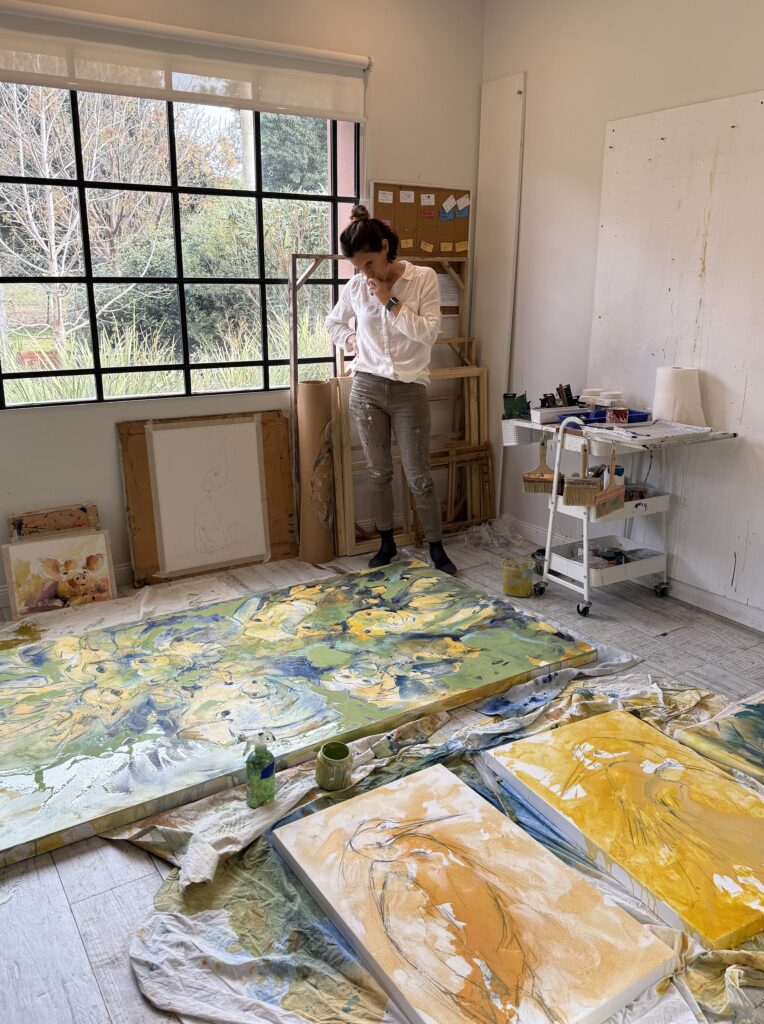
What do the animals of the humid pampas convey to you, and how do you depict them in your paintings?
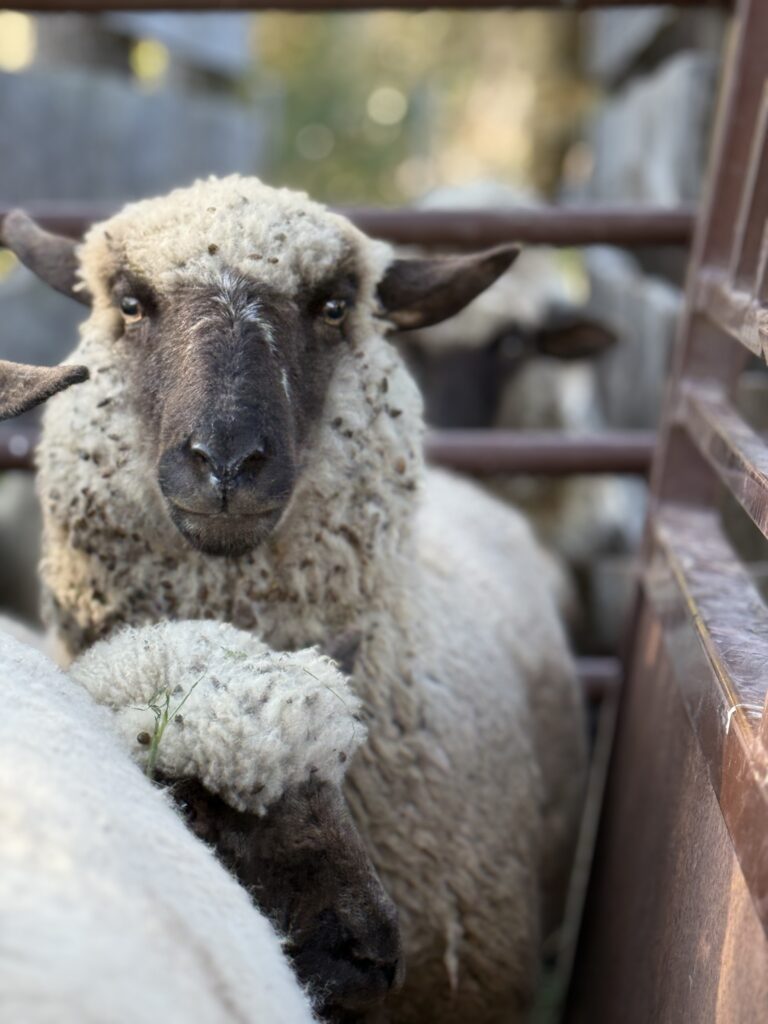
There’s something about representing a living being that captivates me: the silent dialogue between gazes and the invisible bond that forms. The animals of the pampas inspire me with their nobility and calm, and when I portray them, I aim to go beyond their form, capturing the vital energy that defines them.
I feel that a work is complete only when the viewer engages with it, is moved, and makes it their own. It could be through a childhood memory, personal contact with the countryside, or simply letting oneself be carried away by the palette of colors.
What sensations or atmospheres do you want your paintings to convey?
I want to convey calm, waiting, pause. That unhurried rhythm inherent to the language of the countryside. To invite viewers to breathe in the field, to let themselves be enveloped by the colors of nature, and by that serene atmosphere that, far from the noise of the city, opens up in the immensity of the pampas.
Tell us about your technique and the materials you use, and if you things there are other importance thing being an artist..
Most of my materials are water-based, and water is the main fluid that engages them. Layer upon layer, overlapping transparencies, acrylic, watercolor, and diluted pigments cover the canvases. Because my stroke gives me confidence in the creative process, I emphasize it with colored oil pastels. I do not use black, only complementary colors.
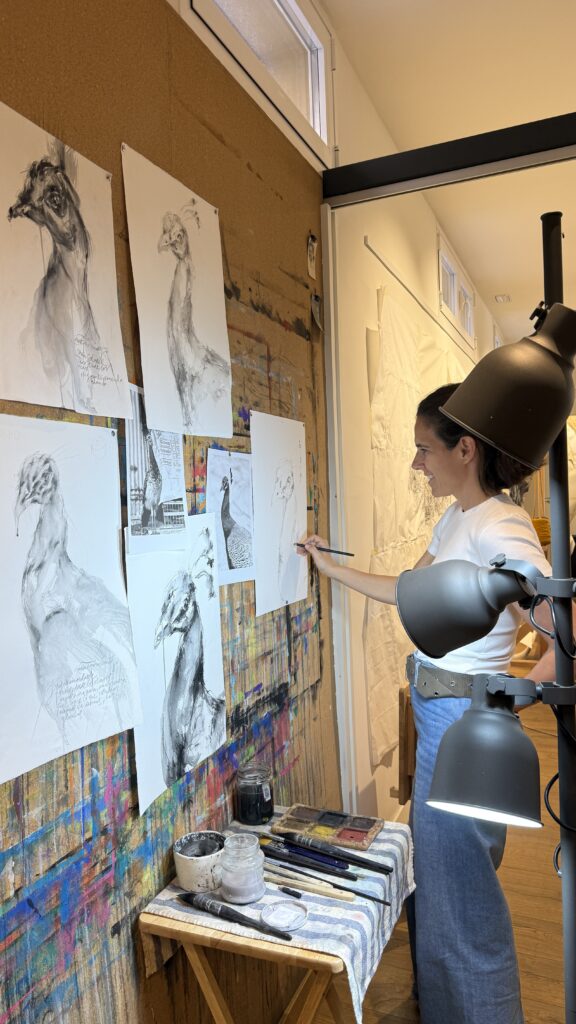
Why is it so important to attend to the economic and financial side as an artist?
Being an artist is, after all, a job like any other. Painting involves investing in quality materials, training, workshops, suppliers, and everything that makes the work possible. Managing the financial aspect is not secondary: it allows creativity to flow, the studio to keep functioning, and art to grow as a professional and sustainable activity over the years.
How do you invest in your development as an artist?
Training is an essential part of any artist’s career. I participate in work clinics where I meet other artists and we analyze the evolution of our work; I take technical and specific training, like color theory or watercolor; also financial and administrative training, because maintaining an organized and sustainable practice is as important as creativity. Additionally, I attend writing workshops, which help me put into words what my works aim to convey.
Which lessons from Paris remain alive in your work today?
I lived for two years in Paris, in the 16th Arrondissement, right next to the Argentine embassy. Seeing my country’s flag fly every day reminded me of where I come from.
That feeling of being abroad gave me freedom and independence, even now that I’m back in my country. It allows me to pause, to take breaks, and to look at things differently.
Paris opened me to the creative world: I breathed art on every street corner, it moved me deeply, and connected me to its core. Venado Tuerto, on the other hand, gave me calm and observation—the necessary pause to look inward.
Returning to Europe to exhibit after several years, what feelings and expectations does this reunion bring?
I will be participating in ART 3F in Monaco in September and Art MUC in Munich in October, with the support of Galería Gaudí (Madrid). I am very happy to see how everything I have been working on is finally taking shape, and I feel deeply gratified.
The feelings are many, but the expectation is one: to bring a piece of my beloved Argentina and have my work resonate in Europe.
Europe—and especially Paris—was the place that gave me the confidence to connect with my most authentic creativity. There I discovered a sincere link between my mind and my hands, an absolute freedom in making that shaped me forever. Today, returning to exhibit in Monaco and Munich is opening those long-desired doors and reconnecting with that creative impulse that has accompanied me ever since.
Further information:
– Website: https://www.marianaberardi.com
– Instagram: https://www.instagram.com/marianaberardi.arte/
– ART 3F Monaco: https://www.art3f.fr/es/monaco/
– Art MUC Munich: https://artmuc.info/en/
Discover more global opportunities, open calls, and artist features in our Art Travelers section.