
A layered exhibition of mythology, popular culture and visual memory arrives in London
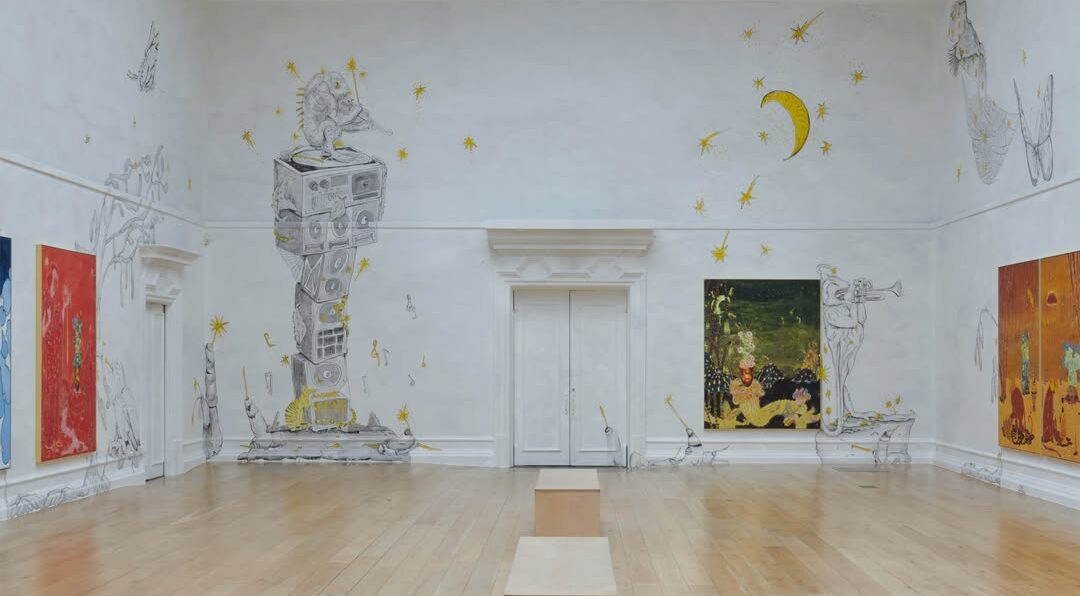
Brazilian artist Paulo Nimer Pjota presents “Encantados” at the South London Gallery, marking his first institutional exhibition in London. Through large-scale paintings populated by animals, mythical figures and imaginary beings, the exhibition develops a visual language that merges fragments of art history, folklore and contemporary culture into unstable narrative environments.
The exhibition “Encantados” positions contemporary painting as a site where historical references and popular imagery coexist without chronological order. The works bring together symbolic vocabularies drawn from mythology, folk tales and visual culture, constructing scenes that feel simultaneously archaeological and speculative. In this context, the exhibition becomes less a sequence of individual paintings and more an immersive system of associations.
Painting As Cultural Accumulation
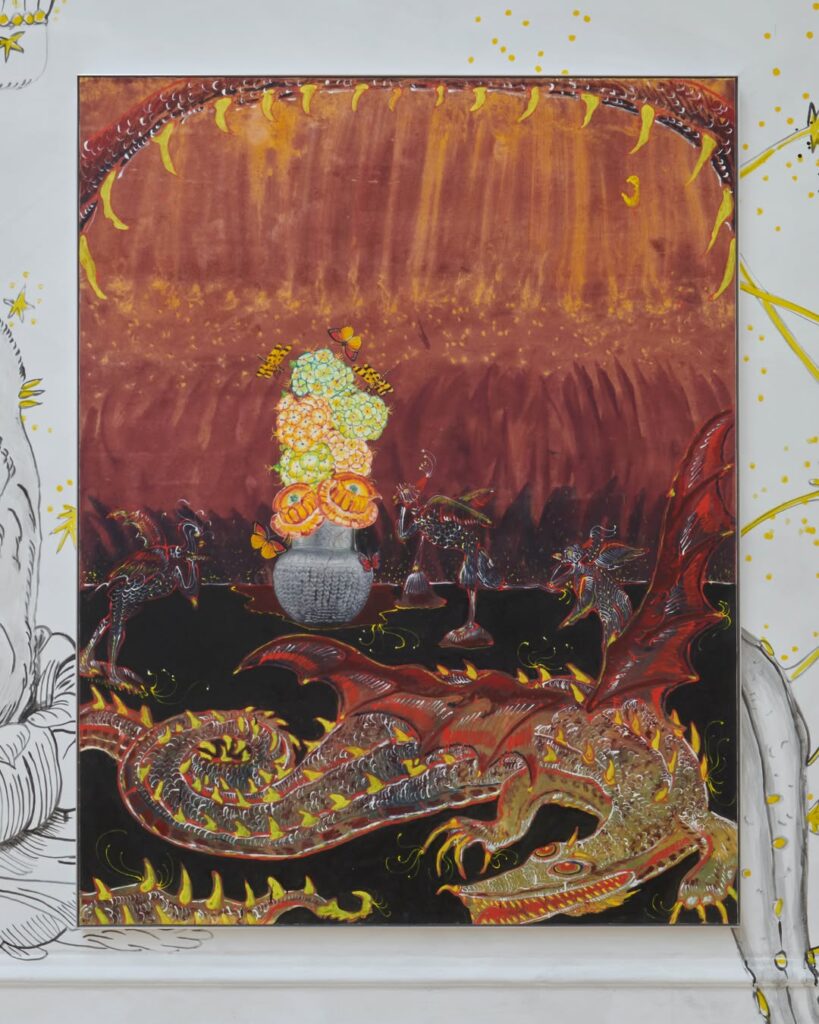
Pjota’s practice has consistently explored the circulation of images across different cultural contexts. In “Encantados”, this process becomes especially visible through compositions that accumulate references rather than resolve them. Animals, fictional creatures and fragmented symbols emerge across expansive pictorial surfaces, creating environments where meanings remain open and unstable.
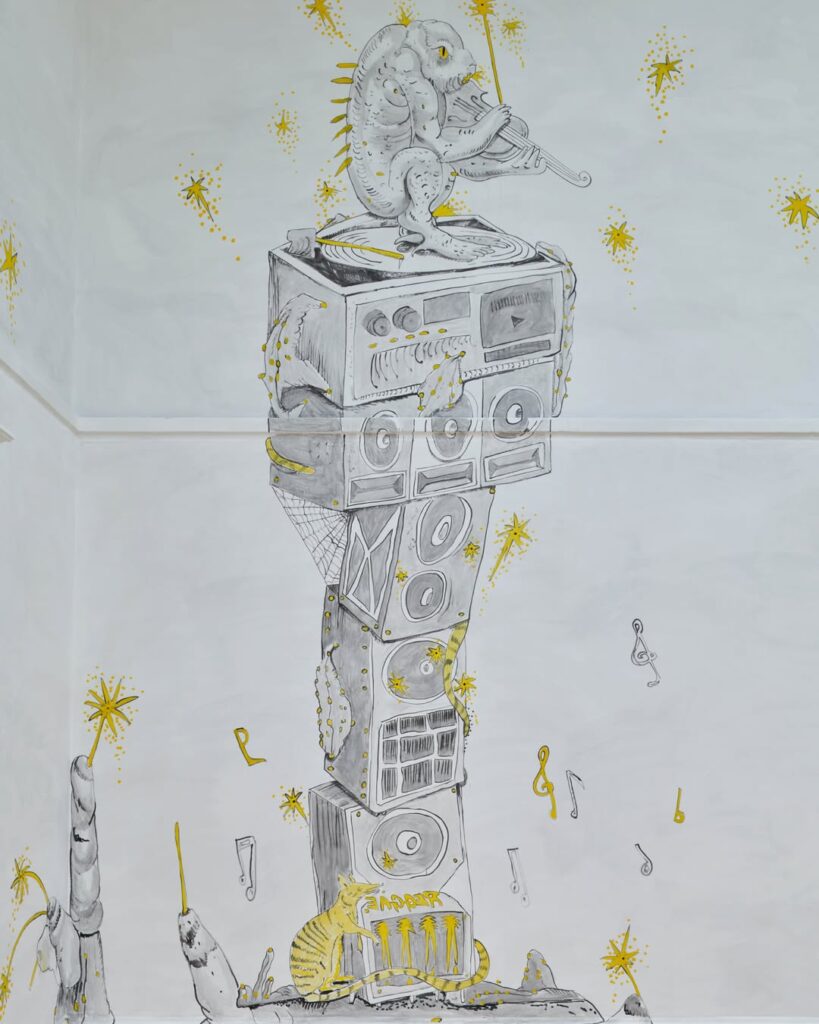
The paintings resist linear storytelling. Instead, they operate through juxtaposition, layering and interruption. Elements associated with mythology or folklore appear beside references linked to popular culture, dissolving distinctions between the sacred, the historical and the contemporary. This visual strategy allows the works to function as dynamic archives rather than fixed narratives.
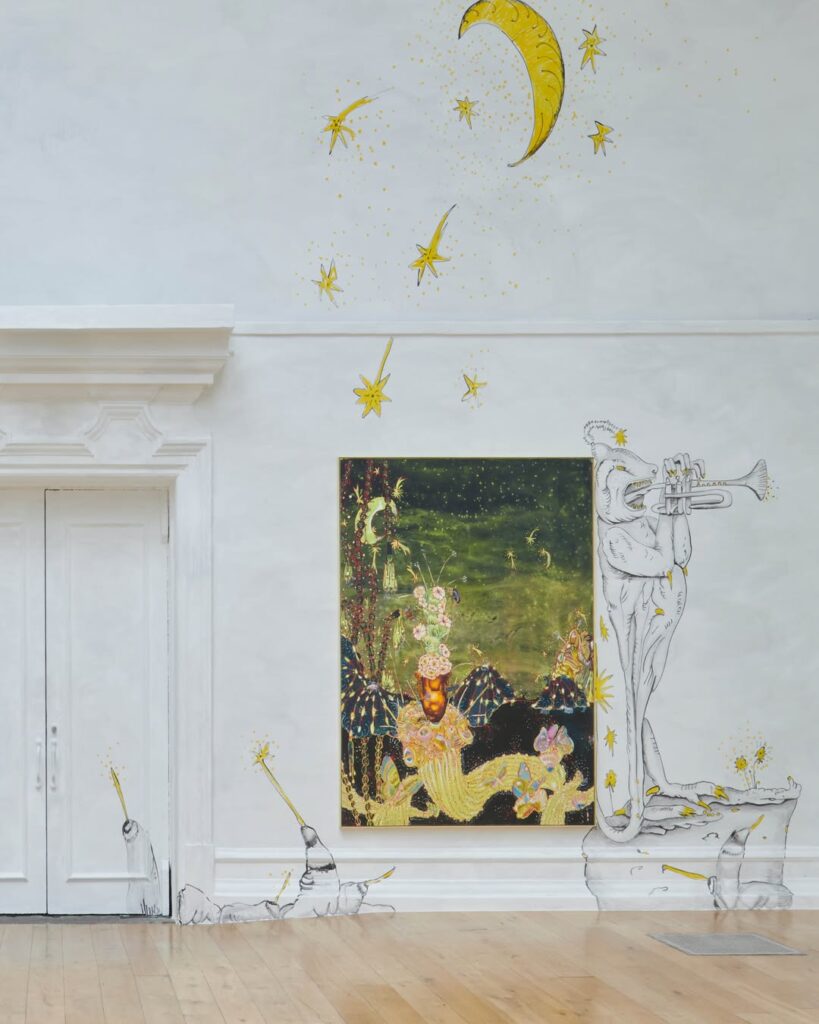
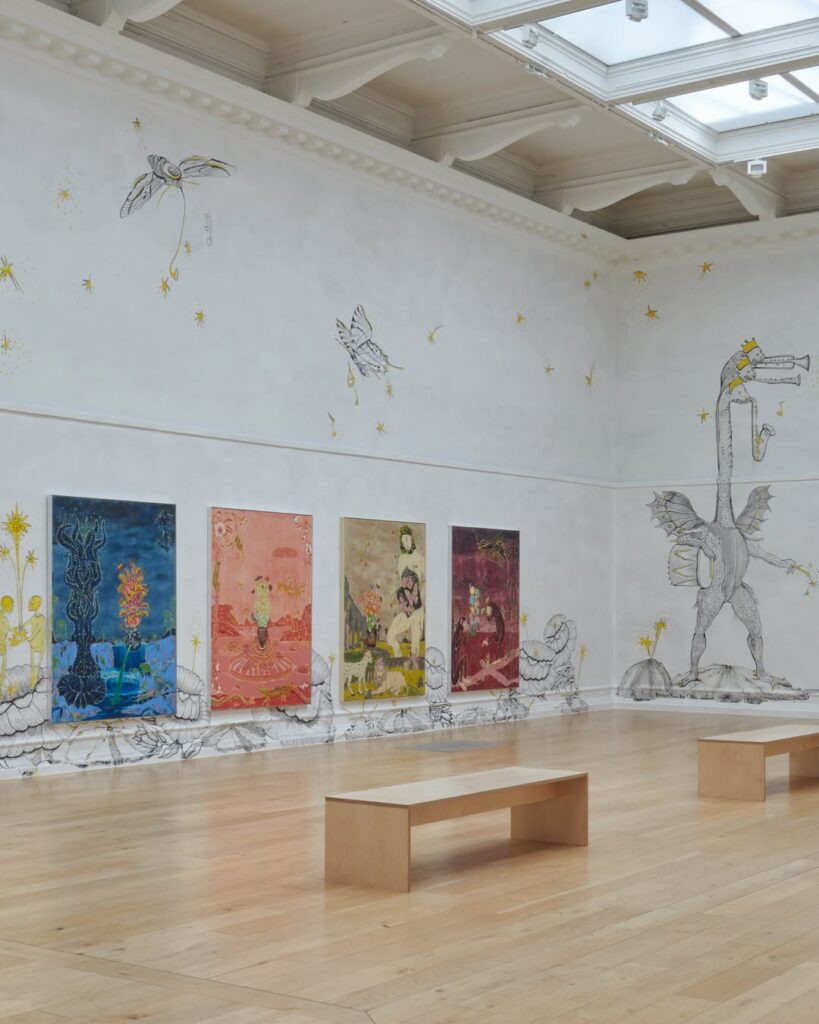
At the same time, the scale of the paintings reinforces their immersive quality. Rather than presenting isolated images, Pjota constructs spatial experiences in which viewers move through dense symbolic landscapes. The exhibition transforms the gallery into a shifting territory populated by imagined presences and cultural residues.
“Encantados” And The Contemporary Painting Landscape
Within the current international painting discourse, “Encantados” reflects a broader interest in hybrid visual languages that combine historical research with speculative imagery. Pjota’s approach does not seek historical reconstruction. Instead, his paintings propose new relationships between references that originate from different times and cultural systems.
This method also challenges conventional hierarchies between institutional art history and vernacular culture. Folk narratives, mythical imagery and popular iconography are treated as equally significant visual sources. Through this accumulation, the exhibition suggests that cultural memory is not stable or singular, but constantly rewritten through circulation and reinterpretation.
The South London Gallery provides a significant institutional context for this presentation. Known for supporting experimental contemporary practices, the institution has long positioned itself as a space for artists whose work expands traditional exhibition formats. In “Encantados”, painting becomes not only an image-making process but also a form of cultural mapping.
Extending The Exhibition Beyond The Gallery
To coincide with the exhibition, Pjota has also produced a new limited-edition artwork titled “Encantados” (2026), available through South London Gallery Bookshop. The edition extends the conceptual framework of the exhibition while reinforcing the relationship between the institutional space and collectible artistic production.
On view until 23 August 2026, “Encantados” contributes to ongoing conversations around mythology, image circulation and contemporary painting practices. For visitors navigating London’s evolving cultural landscape, the exhibition offers an encounter with a visual universe where symbols remain fluid and narratives resist closure. Readers interested in more international exhibition coverage can also explore Lemon Art Magazine’s art agenda.